
Do Statins Cause Dementia?
Crude eyeballing of historical correlations rears it's ugly head again...

This is a free post. I try to keep as many posts free as possible (albeit with a few goodies for the subscribers), though do consider supporting the cause. It’s Christmas and so, through Three Kings Day (Jan 6, 2026), I’m offering 20% off new subscriptions. Get a gift for that special acquaintance you sort of like: https://grimoiremanor.substack.com/e240f698
Recently I came across a video of Dr. Kevin Reese appearing to claim that the creation of statins (used to treat high cholesterol) are responsible for increases in Alzheimer’s diagnosis. I’ll point out the obvious, that I’m no medical doctor. But to my understanding, statins are critical care in reducing high cholesterol levels associated with heart and other circulatory diseases. Claims that statins cause dementia are contradicted by overwhelming evidence. I’m open to good studies that say different, but in light of what we know currently, the kind of statements made by Dr. Reese (who apparently is not a medical doctor anyway1), are potentially dangerous.
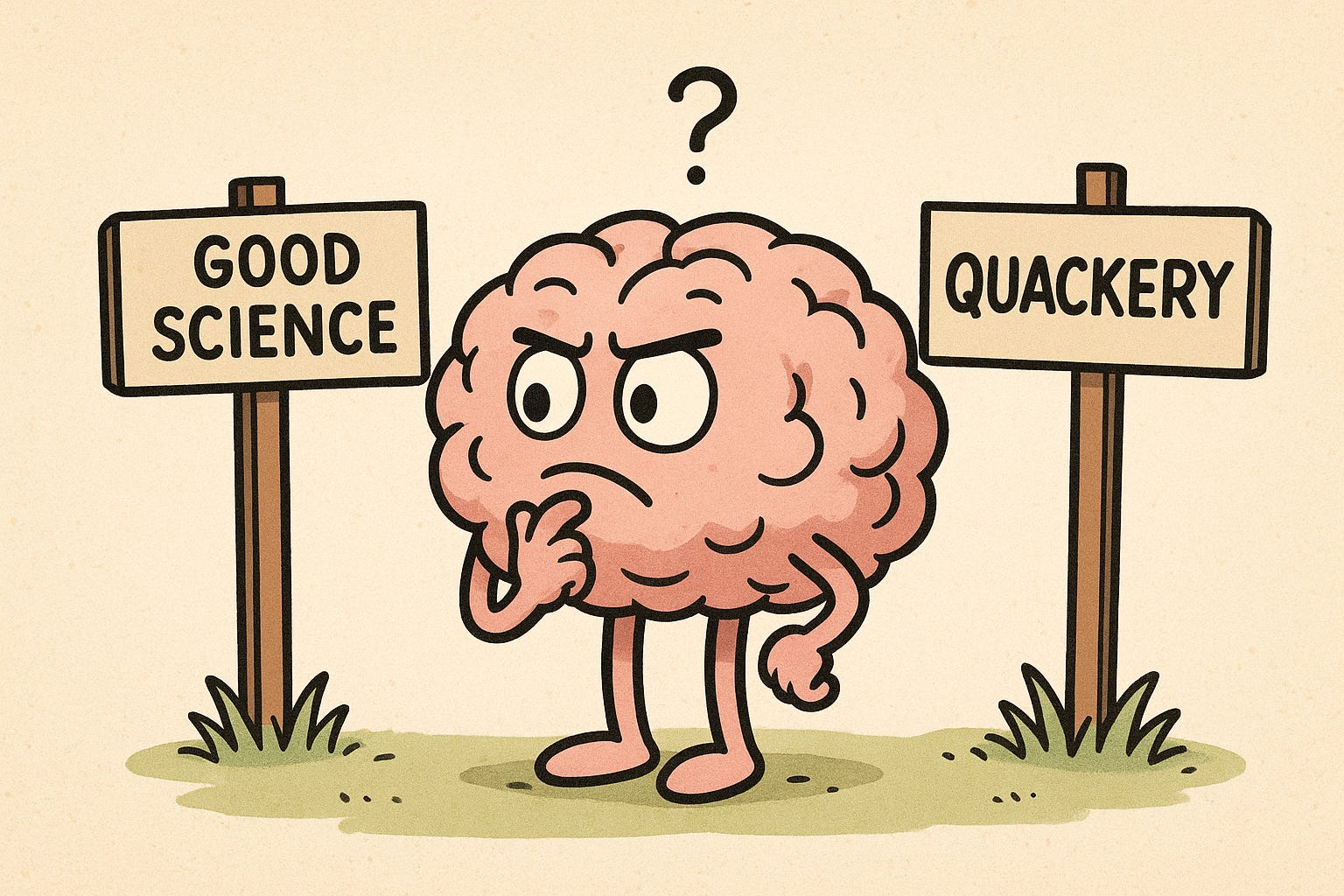
The video in question should raise red flags anyway. It uses techniques common to other moral panics:
1. Overwrought, alarmist, emotional language.
2. Makes a crude association between two ecological events. In this case the advent of statins and a purported rise in Alzheimer’s diagnoses beginning in the 1980s. To say “correlation doesn’t equal causation” doesn’t even do justice. This is just crude eyeballing, common to so many moral panics. Of course, lots of things happened in the 1980s. You could claim, say, Steven Spielberg movies, or the collapse of Communism, or Reese’s Pieces or Dungeons and Dragons, or talk radio cause Alzheimer’s disease2 using this crude logic. Unfortunately, people keep falling for it.
3. The other piece of “evidence” in the video is his observation that statin use is common among Alzheimer’s patients. Sure, that’s because they’re elderly. You could also say, gray hair or cane waving or a love of the Beatles cause Alzheimer’s disease using this logic.
4. Although not featured in this video, folks like Dr. Reese love anecdotes and testimonials in lieu of good, actual evidence.
5. Conveniently, Dr. Reese has lots of books to sell you. As with all moral panics, Dr. Reese gives us a bad guy, in this case the “Evil Empire” of modern medicine. Dr. Reese is, naturally, here to rescue us (at the cost of books and, streaming meditations…I kid you not…speaking engagements, etc.)
To be fair, I don’t blame a guy for making a buck. It just makes me nervous when I see charlatans ignoring actual research and selling people woo. It happens all the time, but this one seems particularly risky.
I’ve never gotten exactly why people fall for this kind of stuff. Hey, I’d love to think I could eat all the cholesterol I want and not get sick too. But that video raises obvious alarm bells. The very framing “The medical system that has dramatically lengthened our life spans and improved quality of life is screwing you” should require a high bar of evidence. That’s not to say modern medicine is perfect…far from it…but there’s a lot of snake oil out there too. Probably we shouldn’t be getting our medicine (or maybe much else) from bestselling books.
I suspect people generally want quick fixes with miracle promises. Framing things like there’s an “evil empire” also seems to intuitively appeal to many people. Moral panics often validate intuitive distrust, making people feel “heard” even as a hand is reaching into their wallet. People love anecdotes and testimonials, no matter how many times you tell them they are worthless as evidence. Moral entrepreneurs often exude a kind of reassuring charisma. But they killed people with big promises and garbage cures in the past and, I suspect, they’re still doing so today.
Not that there aren’t plenty of medical doctors who are quacks, to be fair.
Whether Alzheimer’s disease is becoming more common is controversial. It’s overall prevalence does seem to be rising, simply because we are living longer and it is a disease of the old. Whether the incidence of the disease per age category is rising or falling is less clear. Of course, awareness and more reliable diagnoses also became available in the 1980s and beyond. Overall, I’d say there’s not a clear case people are more likely to develop Alzheimer’s disease than in the past, aside from as a consequence of longer life.